Saturday, October 22, 2016

Returning to our Roots Part One - Jill

Although we were both born in Salt Lake City and graduated from the University of Utah, we have been away for 46 years. So it has been fun coming back for awhile and remembering our childhoods here. 

It has been particularly neat to have meetings and even Sunday Church at the Joseph Smith Memorial Building which used to be the Hotel Utah. When the Hotel Utah opened, Jill's great grandfather was the doorman, greeting passengers coming in on the nearby railroad visiting Salt Lake City. Because of his influence, Jill's father became a bell boy here, then a desk clerk, moving up to Assistant Manager before he was 30.  He then went on to be the manager at the Hotel Temple Square before World War II.  My parents were married in the Jade Room, and had their 50th wedding anniversary dinner there as well.  Of course, now it is the Joseph Smith Memorial building.  Our missionary branch meets in the former Lafayette Ballroom!  


Also, a couple of blocks away is my grandparents' home where my father grew up. It has been redone, and apparently they put a bedroom in the attic, but it remains the sweet home where we would go visit my grandparents nearly every Sunday.  I loved the game closet in the entry way and the brass bed where I slept many times.  They had an old footed tub that was very deep and the perfect place to soak.  There was a garden in the back and a large pigeon coop.    


From our office on the 28th top floor of the Church Office Building (the tallest in Utah), I can see the LDS Hospital where my father was administrator and the area where the home in which I grew up was located. 


At least once during the summer, we used to make lunches, hike down through Memory Grove, and then go on up to Ensign Peak.  We would sometimes play in the City Creek water in Memory Grove, and usually eat our lunch there because it was shady. It was safe during those times to just go exploring with friends and no adults.   Now there is a gate, and I don't know how you get permission to go in. 

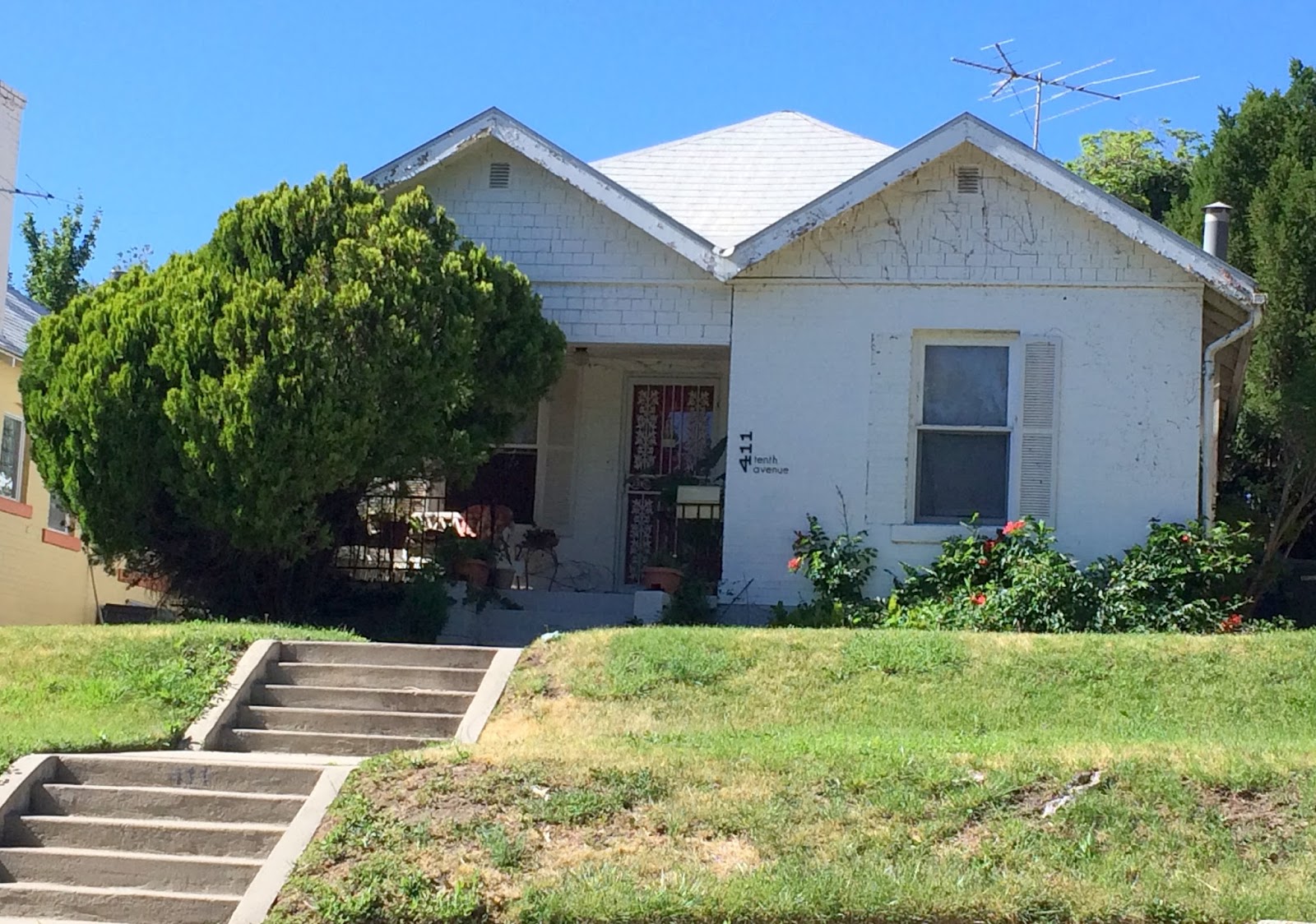
As I drove on up the Avenues, I drove by my first home at 411 10th Avenue.  It looks exactly the same.  The only difference is that my elementary school - Ensign - used to be across the street and there are condos there now.  They built a new school further East on 11th Avenue.


Driving up to 685 G Street, it was neat to see how many homes hadn't changed at all.  But when I reached the home where I lived until I married, and my folks lived in for 38 years, I couldn't even see it because of all the trees. I would love to just knock on the door and ask if I could look around the yard - it was a magical place to grow up and our children would all agree, I'm sure.  


But it was fun looking back down the street - a great hill for sledding, but a long walk home from junior high which is still on 1st South and 9th East - no buses then.

Besides being able to drive by our childhood homes and the schools we attended, we drove up Little Cottonwood Canyon a few weeks ago to visit Alta ski resort where I learned to ski. I made a snowball and we took a photo.  Again we love those mountains...


Saturday, October 15, 2016

Autumn Day

We both love mountains, so we decided to take a trip to up the Alpine Loop which is from American Fork Canyon, through the Uinta National Forest and on to Robert Redford's Sundance and Provo Canyon. 
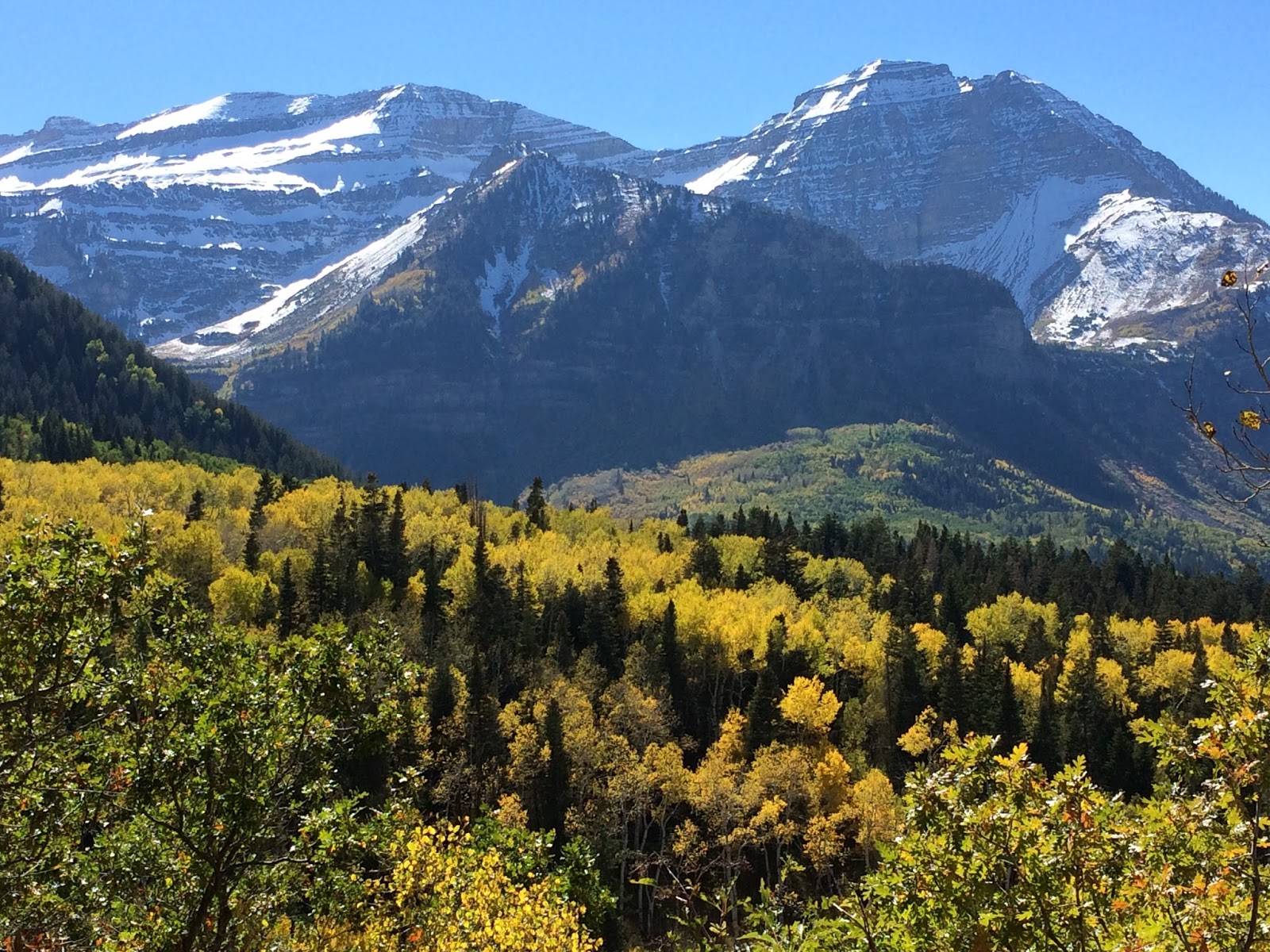
This 20-mile drive winds through rugged alpine canyons of the Wasatch Range with inspiring views of Mount Timpanogos and other glacier-carved peaks. Timpanogos Cave National Monument (which we will save for another adventure) is located along the route.
As we drove along we saw a sign for Cascade Springs, so we left the main path to go exploring.  
This is a mountain spring which is criss-crossed by a boardwalk.  You pass lovely natural pools and then little cascading terraces filled with fish and aquatic plants.  
Although it was a lovely autumn day, we were surprised to see mainly yellow-leafed aspens and birchs, rather than the deep reds and dark golds of the hard woods in Georgia and Virginia (where our daughter Brittany lives).  But it was still a nice break from our busy times.


Saturday, October 8, 2016

The African Interpreters

Although we have interpreters in 57 booths and in countries for General Conference, not every language was represented.  For that reason, the African languages come a week later to post record Conference. The languages are Efik, Igbuano, Twi, and Yoruba. We also have Ahmaric (Ethiopia), Fante, and Malagasy (Madagascar), but those are done with the other languages. These wonderful folks come from all over the United States, Nigeria, and Ghana to do the interpretation. In addition, we also had a recent event which was for Africa West, so we had representatives from each of the teams do that as well.

Besides arranging their airfares, hotels, and food during their stay, we make sure that they have the translations that we need.They also like different snacks at the recording (fruit and cheese rather than candy and granola bars. In between their recording sessions, we were able to host them at the Lion House Restaurant which they really enjoyed.
The Yoruba team

The Igbo team

The Efik team
The Twi team
The Efik and Igbo teams
The Igbo and Yoruba team

Rob, Stewart, and other team members
They are such sweet people and most have a story to tell about how they got here to the United States - some are here because of political asylum (returning to their country could mean their death), others are here going to school and then planning on going home and helping build their country, and others have just settled here and married an American. One woman who has lived in California for some time, returned from Nigeria just a day before having attended her daughter's wedding. Although the daughter and her husband lived in the US,, they wanted to go back home to go through a traditional wedding tribal wedding.

 We again are so grateful to have rubbed shoulders with such interesting people


.

Saturday, October 1, 2016

General Conference

When we first received our calling and were told that we would be working with the interpreters who interpreted events for the Church, we really could only think about General Conference twice a year.  We have since learned that there are around 300 events a year that require interpreters!
But General Conference is the biggest one, with over 90 languages both from Salt Lake City and also in many countries throughout the world.   We had over 250 interpreters during the two day event


The picture shows the booth numbers with the names of the languages on the left.
The interpreters have been receiving extra training a number of Saturdays to help them practice reading with feeling and speaking clearly, Here is a link to a wonderful ABC interview that they had during the Conference which talks about how it all comes together. 
Some of the Japanese team members
On Saturday morning, as they started to come in, it was so special to know the languages that they represent.  The Arabs chose to come in their robes and keffiyehs or headdresses, and they were pretty noisy.  They were placed in a booth right by the Apaches who are very quiet, and that wasn't a good mix - not again
The Russian sisters- both Natalias!
The Asians were prompt and focused whereas the Samoans and Tongans were pretty laid back.   The Russians are very serious, and so diligent.
And the Russian brothers
One of the things that thrilled Jill was talking to the Farsi interpreters since she lived in Iran when she was in Junior High School.  She remembered some words, so was able to greet them and share where she went while she was there.  Such dear folks!
Our sweet Cebuano sisters
All of these volunteers work very hard these two days, but they also enjoy themselves a lot.  And we, of course, enjoyed just being with them. 

These are the booth signs for some of the languages that we support and are here at the Conference Center interpreting.  Our other languages are tieline, doing it from their own country.


Saturday, September 10, 2016

The Utah State Fair

When we grew up, going to the Utah State Fair every September was a big deal.  It is interesting that even though we didn't know each other then, we both remembered the Horticultural building where every county in Utah put on a display about their country using fruits and vegetables to make pictures.  We also loved visiting the animal barns to see the cows, sheep, pigs, and horses.
So one of things that we wanted to do during our first September here in 46 years was to visit the fair. We have to say that we were both a little disappointed. The Horticultural building had a couple of displays, but there were mostly different vegetables displayed with the ribbons that they had won.
There were goats in one building and sheep in another.  But we learned that they had to rotate the livestock in and out because there wasn't enough room to have them all there at the same time.  We loved seeing this momma pig with all the babies..
But the most important reason that we went was to see the amazing quilt that Willi, my sister Joy's husband had done which won third prize.  Willi is 82, so this was particularly a great honor.  And then he gave it to us for Christmas!  What a sweet, sweet gift that we will treasure.

Wednesday, September 7, 2016

Where We Work


We find that we continually are pinching ourselves because we work in such lovely surroundings.

The 30-odd acres of beautifully-landscaped land occupied by Temple Square and nearby buildings cover a network of underground tunnels that connect the buildings and multi-level parking garages. The design significantly reduces pedestrian and vehicular traffic and contributes to the peace and serenity that permeates the entire area.


After our two weeks in Family History, we started our official assignment in an office on the 2nd floor of the Church Office Building (called the COB) where the Interpretation Services Department of the Church is temporarily located. We will be moving to the 27th floor by the end of October. (Note the list on the board of responsibilities our trainers/managers are trying to cover with us.)
When we're working with our interpretation teams, we're in a special-access area of the Conference Center called "M1," This area contains more than sixty booths and training rooms where the interpreters, each equipped with a monitor and headphones, read already-translated text broadcast in 95 languages, hopefully in a way that mimics as closely the original speaker's intent. Although not apparent from the outside, the auditorium inside and partially below ground, is large enough to hold two 747's side-by-side.
Each booth has to be readied for each event including having water, candy, pads of paper for notes, and pens and pencils.  It requires a little bit of time performing this set up with every event.
The most-important building to us, both as a couple and as a Church, is the Temple of the Lord.  This is where we and both of our parents were sealed as a couple in a marriage that will last for eternity. There are now more than 150 other temples in many countries of the world. This one is special to us because here we received the promise that, if we are all faithful to the end, both we and our families can be together forever.
 
This reflecting pond is often a backdrop for wedding photos, and also features floating lamps like candles during the holidays.  The surrounding trees are already being decorated for Christmas
Some old guy posing in front of the flowers that are blooming virtually everywhere
We often eat our lunch together outside, just a few feet from this gorgeous collection. And the gardens change by the seasons.
This is one of the smallest buildings of them all on the campus, the Church Administration Building. From here the First Presidency of the Church, the Twelve Apostles and other leading General Authorities direct the Church of now approximately 15 million members world wide. The office of the Prophet and President of the Church, Thomas S. Monson, is on the first floor, lower left corner of this building.

Saturday, September 3, 2016

So What Do We Do?

Before we started the mission, we were told that we would be supervising the interpreters for 27 languages in various events, The Church interprets 95 languages. (The United Nations does 10).
Poster from the 50 Year Celebration in 2014
We wondered what events besides General Conference twice a year? Since then we have learned that there are about 300 events that occur during the year including at least twice monthly MTC devotionals; the First Presidency Christmas Devotional; various voice-overs for recordings; regional stake conferences; training for temple presidents and new mission presidents; and the worldwide Law and Religious Liberties Symposium which took place last week – just to name a number of them. Whew!

Sister Dunford training the new Bulgarian coordinator
Our languages are: Albanian, Russian, Bulgarian, Georgian, and Romanian from the former Soviet Union; Danish, Dutch, Finnish, Icelandic, Norwegian, and Swedish from northern Europe; Amharic (Ethiopia), Efik, Fante, Igo, Malagasy (Madagascar), Twi and Yoruba from Africa; Cebuano, Hiligaynon, Ilogono, and Tagalog from the Philippines; Haitian, Japanese, Samoan, and Tongan from the rest of the world.
Two sisters - both Natalias - from the Russian team
The Russian brothers
Us with some of Cebuano team
 Many of the countries do interpreting in-country with a back-up team here. A number (especially all of the European ones) are only in country. And some, Haitian, and all the African ones except Fante, are only interpreted here. All together, there are over 300 interpreters on our teams alone. There are ten internet languages, including Japanese and Russian, that are used frequently for various events, especially Japanese. Other than for General Conference, when many are flown in from other parts of the country and the world, the interpreters mainly live in Utah and Idaho.
Elder Dunford viewing the screen that the interpreters use to watch
 the speakers & make sure that they sync.
So when an event comes up, we are sent the details and the languages needed, and then we contact the language coordinators to give them the information.  They, in turn, contact the interpreters to assign them to the event.  There are a lot of cogs making the wheels go. Even though we are very busy, we are loving our mission so much and are grateful to be able to serve the Lord in this way.
The main control room where they can monitor
80-100 interpreters/languages at a time